
Interview with Ashaki M. Jackson

Ashaki M. Jackson is a poet and social psychologist residing in Los Angeles. Her poem “An American Paratrooper” appears in [r.kv.r.y. quarterly‘s] April 2014 issue. Noted authors and Ashaki confidants Khadijah Queen (www.khadijahqueen.com) and Kima Jones (www.thenotoriouskima.com) recently pitched a few questions to her about her work – an ongoing reflection on grief, coping, and defunct mortuary rites grounded in her grandmother’s death.

This interview is reposted with permission from the editors of r.kv.r.y. quarterly where it was first published

Khadijah Queen (KQ) begins a little late but gracefully: Snap! I got distracted by YouTube and middle school homework and cake and hot dogs… ​What distracts you most from your creative work, and how do you overcome said distraction(s) and/or use them to your advantage?

Ashaki Jackson (AJ): This day-to-day thing. I’m responding from bed while deep-conditioning my hair and jotting a To Do list for the next four hours.

Chicken is marinating. Dishes still aren’t going to wash themselves. This basket of clean laundry is giving me the side-eye. It is 5:30 PM.

Being swallowed by the mundane is very comforting to me. My writing revolves around personal loss — mainly that of my grandmother. I still reside in her memory and fold into my grief when I evoke her in poems. The feelings are oppressive even when I write about my broader reflection on loss as I did with An American Paratrooper. Inundating myself with a Big Bang Theory-spring cleaning-pedicure session or reading books in a loud restaurant gives me respite. It gives me spaces to tuck my grief until I’m ready to see it again.

KQ: Talk about the bodied-ness of your poems. How central, tangential, and/or inextricable are the physical and the linguistic?

AJ: I have bodies. Many bodies. Other peoples’ bodies. Loved ones’ bodies.

Sometimes it is the thought of the last state in which I saw a late loved one that pops into my mind.

This is a painful but helpful entry into my drafts. I also spent quite a bit of time studying anthropologists’ articles about mortuary rites. Cecilia McCallum, Ph.D., is a lasting favorite. She documents the care with which certain South American tribe members once treated their deceased family members’ bodies before consuming them.

I learned that mourning isn’t merely psychological; it is a ceremony, a meal, something that lingers on the palate. The language of consumption in relation to the lingering sense of loss underpins many of my pieces—devouring, preservation, and that sense of never being sate. Some of my poems read as if words are falling out of the mouth haphazardly. Others read as if I’m choking on the grief. I’m not able to articulate the craft, but thematically I might refer to it as written keening.

Kima Jones (KJ): Essentially, form is choosing skin, so I want to revisit Khadijah’s question on bodied-ness: Which form, which body do you like to take on most? And for your grandmother?

AJ: My good friend, Noah, mentioned that some of us “like to wear each other’s bodies.” We were speaking about recent travesties — Malaysian Flight 370, MV Sewol in South Korea, the Chibok girls. For all of those bodies lost, families only received apologies from officials — the emptiest gesture. Like gristle.

I think you crave a body — living or dead — particularly when you do not have one.

Bodies are tangible and to be cared for. That care is some kind of ritual.

My work doesn’t have a particular body. Forms are rare in my work. However, I allow my lines to occupy the page in non-traditional ways. One poem is written in the choppiness of a choking cry. In a different piece, the words collide at the bottom of the page – a visual homage to hopelessness in grief. The reader should want to gather words from these pieces, scrape them from the ground, and comfort them.

I spend a good amount of time thinking on my late grandmother’s passing. It aides my coping to wade through the memories, but it also gives me access to a dialect of grief that others might make use of in the future. In my manuscript, I write about her transition in various forms with the same sentiment about the body. She should be home, with us, and cared for. I don’t know if it’s the best I can do to evoke her in my pages as if my manuscript is her portable body. It is a start for me.

KJ: There is always something hiding, even in the uncovering and undoing. I am wondering how Ashaki keeps the secret things hidden during the excavation, the mining of all those graves?

AJ: I’m of the mind that the reader does not need to know me to enter, understand, experience, or relate to the work. Few books would ever be read with this requirement. What I need from the reader: trust. I might not hand you my articulated grief or reveal everything I’ve had to unearth to write a piece, but I’ll share work that will resonate in some way with the reader–that will rub the reader’s bruises just as my ache is continually touched.

KJ: It’s a question I’m turning over more and more in my head in regard to my own heart and my own good feeling, so I ask you, what is the use of the love poem?

AJ: Use of the love poem: praise for a body; idolatry; celebration of the mind’s fire; a method of serenading; to fully taste; to build a word altar to a moment; to sustain a beautiful feeling; to tuck a piece of candy in my pillowcase for later; to be reckless in my selfishness by flaunting; to maintain my warmth; to serve me.

I think that’s broad enough to comfortably fit my poems on grief and loss and loose enough to include the poems I have yet to write for the loves I have yet to know.
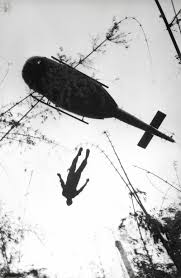
The-Body-of-a-Soldier

KQ: Truth & honesty– where on the spectrum when dealing with loss/grief do these consciously figure? Are they seeds or threads? Both? How much gives way to metaphor or story or construct?

​AJ: I think Kima’s question about the use of a love poem is relevant here. If I were to write a love poem — let’s say “romantic” in some way — my approach could be seen as dishonest because I haven’t known love. I’d tell you that in the poem. I’m pretty forthcoming with what I don’t know. But, it would still be a decent poem because lies are often the most interesting genre.

When dealing with loss, I am more honest about what I have experienced than what I have not. I think my feelings are evident and even resounding when I write about personal loss because I know its labyrinth. I become the omniscient tour guide. When writing others’ losses: my empathy might seem insufficient. My feelings about documenting grief are still true and perhaps a projection of my mourning. But, I don’t know others’ specific pains, which are rooted in long relationships, family, home, and hopes for the future.

The lyric fills in those hollows. The poem becomes indigenous to its characters — not me. I am honest until my imagination converts a paratrooper’s body being retrieved from Cambodia into a native stork.

Ashaki-Jackson-300x224

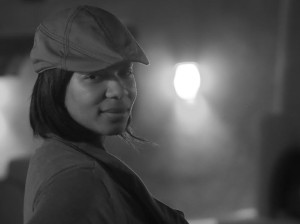
Dr. Ashaki M. Jackson is a social psychologist and poet who has worked with post-incarceration youth through research, evaluation and creative arts mentoring for over one decade. She is a Cave Canem and VONA alumna. Her work has appeared or is forthcoming in Prairie Schooner, Rkvry Quarterly and CURA Magazine, among others. Miel Books will publish her chapbook, Language Lesson, in fall 2016. She lives and works in Los Angeles, California.
Closing the Gap: DON’T CHEAT. YOU CAN STILL GET PUBLISHED.

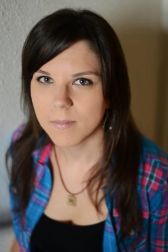
Back in September, The New Republic published an article entitled, “Cheat! It’s the Only Way to Get Published.” but not everyone was so convinced. Here is one rebuttal from writer, Rachael Warecki reposted here from Zoetic Press, first published October 5, 2015.

First, let me say that I’m aware I have several legs up in the literary world just by dint of being white, middle-class, over-educated, and employed in a white-collar job. My family and friends have always been supportive of my desire to write, even when they haven’t understood it; I’ve never had anyone tell me that writing is something I shouldn’t do. I have time, space, and a room of my own: in many ways, to many people, the life I lucked into could be considered its own literary cheat.

In the fall of 2011, though, I was recovering from several serious medical issues, unemployed, and in the middle of my first semester as a graduate student in Antioch University Los Angeles’ MFA program. (In the spirit of encouraging fellow emerging writers, it’s perhaps pertinent to add that I did not just sail into an MFA program; Antioch accepted me off the waitlist.) I didn’t have any literary connections to recommend my work. I didn’t have any prestige-journal stationery on which I could write my cover letters. While looking for literary magazines that might publish my short stories, I noticed a call for submissions for the inaugural issue of The Masters Review, a lit mag that—at that time—was only open to writers attending grad school.

Back then, my assets consisted of my words, my classmates’ assurance that my stories were ready for publication, and the generosity of a literary magazine truly committed to helping new writers succeed. Because The Masters Review’s author demographic was so narrow, I thought my work might have a better chance of successfully making its way through the slush pile. As it turned out, I was right: my short story “The Rites of Summer” was published in The Masters Review’s 2012 issue.

In the years since, I’ve worked to build those post-slush literary relationships. I’ve kept in touch with one of The Masters Review’s editors, and I’ve continued to submit my work to their contests and anthologies, which have now expanded to include all emerging writers—not just those in MFA programs. My most recent submission, “10:25 a.m. EDT,” earned an honorable mention and a pending review from a top literary agency, which is an amazing career opportunity for which I’m eternally grateful.

More importantly, I’ve also continued to work those slush piles. Although I had zero relationships with any of the top-tier literary magazines, once I had work I thought was strong enough, I started shooting for the moon. Out of those long-shot submissions, I’ve received personal rejections and encouragement from fiction editors at Tin House, The Atlantic Monthly, Agni, Hayden’s Ferry Review, Blackbird, and PANK. I say this not to brag, but to point out that you can submit to slush piles of top-tier magazines and, if your work is a good enough fit, editors will start to pay long-term attention to you, even if you don’t have a list of previous publication credits or a fancy lit mag’s letterhead to back you up.

Here’s the rub, though: at the most basic level, if you want to be published without “cheating,” you need to be selective about what you send. Three years later, I’m still proud of “The Rites of Summer,” as I am of every story I’ve published, but I’ve also written stories that I’ve stopped submitting for now because I know they’re not yet strong enough for the markets in which I want to be published. Of my unpublished work, I have three “powerhouse” stories making the rounds of contests and top-tier literary magazines, but I also have five other stories, all written almost two years ago, that I’m still pumping up to that heavyweight level. Beyond that, everything else is unsalvageable for various reasons. That’s one of the most important lessons I’ve learned in my fledgling writing career: my work can be well-written and well-constructed, but it can still be too unoriginal, too white-bread, and/or too autobiographical to be publishable. Not everything is fit to print.

Which leads into the fact that you also need to be selective about where you send your work. If you’re an emerging writer, look for literary magazines that are committed to finding, publishing, and promoting emerging writers; that way, you won’t be competing for limited page space with the likes of Joyce Carol Oates and Adam Johnson. The Masters Review is a great place to submit since it’s only open to new voices, but many other top-tier publications, such as Glimmer Train and A Public Space, hold contests and grant fellowships specifically designed to attract new writers. If you’re working in a certain genre, submit to magazines that appreciate that genre rather than disdain it. If you think a certain publication might be a good fit for your work, get a hold of some back issues to make sure—even print journals usually have one or two stories available for free online.

The world of literary journals and publications can seem exclusive, insular, and elitist, and that reputation is in many ways deserved. But it’s not a completely impermeable membrane, and you don’t have to cheat to make inroads. Just be strategic and selective about your submissions, and don’t be afraid to cultivate relationships with other writers, wherever you may find them.


1091093_347757792022433_1818843801_oRachael Warecki received her MFA in Fiction from Antioch University Los Angeles. She is also an alumna of Scripps College, Loyola Marymount University, and the 2008 Teach for America Los Angeles corps. Her fiction has appeared in The Masters Review, Midwestern Gothic, The Los Angeles Review, and elsewhere. In her spare time, she enjoys rooting for the Cleveland Indians and the Ohio State Buckeyes. She is currently at work on a novel.

Behind the Editor’s Desk: Reading Fees, Literary Citizenship and Doing it for the Love of Poetry – An Interview with Editor and Publisher, Molly Sutton Kiefer


216823_10150271293399379_918419_n
Molly Sutton Kiefer, is an essayist and poet with numerous publications including the lyric essay, Nestuary (Ricochet Editions 2014) and two chapbooks. She edited for dislocate and Midway Journal before co-founding Tinderbox Poetry Journal with her friend, Brett Elizabeth Jenkins. She is now happily tackling the role of publisher for her newest project, Tinderbox Editions. In a submission call I picked up through the yahoo! listserv CRWROPPS (Creative Writing Opportunities List), Kiefer announced Tinderbox Editions’ latest open reading period will have a fee-free option until August 31st. As a poet who struggles with innumerable pay-to-play contests and open readings, I was excited to learn about reading fees from the publisher’s perspective and to hear more on running a journal and press. Here is what she had to share.

by Xochitl-Julisa Bermejo

WOMEN WHO SUBMIT: In Tinderbox’s most recent submission call, it stated, “Due to an enlightening conversation in a private Facebook group, I’ve decided to open up submissions to my press, Tinderbox Editions, with a donation or fee-free option.” What point or comment from this private conversation inspired you to take action?

MOLLY SUTTON KIEFER: It was definitely the moment when, I think it was Margaret Bashaar of Hyacinth Girl Press, reminded us that the fee is prohibitive for some writers, and she mentioned that the poetry world can be classist in this way. In another thread, another smart editor pointed out how when people who have to relinquish a certain amount of money, it brings them closer to making absolutely certain they are sending out the tightest manuscript they can. I think both points are valid.

I might have to rethink our model as we grow, and that’s OK. Running a press is an adaptable experience. But for the time being, I don’t want to limit the manuscripts I read and consider to those I have a connection to or those who can afford to pay out the fee.

WWS: In offering a fee-free option, what are you hoping to achieve with your submission call?

MSK: What I’m seeing already is a wide range of manuscripts—that diversity of style and voice is so important to me. I’m mostly hoping the fee-free means we’re opening to those who might not otherwise be able to send out that book, but [I] also [hope it] will turn up some manuscripts that are taking more chances.

And I hope that those who can donate, do. Every time I pay a fee to a contest, I do think of it as a donation to said press, but I know that isn’t the case for everyone.

WWS: Do you think it will change the amount or quality of work you will see?

MSK: It’s our first open reading period, so it’s hard to tell! I know a lot of the bigger contests average in the hundreds, and we’ve already seen fourteen in the week that we’ve been open. Fortunately, I was able to gather a team of four volunteers to help with the reading of the manuscripts, which I think is important for the slush—this gives the book a better chance of having a champion who might point out something I missed. I’m reading everything, though, so everything will be considered carefully from that final editorial perspective.

At the journal, it’s become important to me to always have open reading. I am so greedy for good poems, I hate to imagine turning some talent away because we are closed.

WWS: In “The Persistence of Litmags”—an article published in The New Yorker last week—Stephen Burt details the hardships of putting together a litmag such as no money, the hours are terrible, and you’ll never get famous. Yet people continue do it. Why? What drove you to start Tinderbox Poetry Journal and now Tinderbox Editions?

MSK: Brett Elizabeth Jenkins and I set out to start [Tinderbox Poetry Journal] a year and a half ago. We were both editing poetry at other mags that combined CNF and fiction and sometimes art with poems, and both of us loved the work. I wanted to start something though, I wanted it to feel more like mine, more of a connection to my own aesthetic, or formation and evolution thereof, and I wanted a partner in this enterprise, so I asked [Brett]—one of my poet-friends with the keenest eye and biggest drive—and TPJ was formed.

I love the editorial process so much; I discovered I was a unique bird when I told others how much I enjoyed the slush. I love finding a beautiful poem and championing it!

I started Tinderbox Editions separate from Brett. What I’ve found as I’ve been working on these books with these stellar poets, and one essayist, and as I’ve begun collecting for a lyric essay anthology…is that I want to publish the work I have a slight bit of envy for…This isn’t the destructive sort of envy, but a woah kind of admiration and desire. If I can’t have written the piece or the book myself, then I want to do all the work I can in finding it a home in this world and getting it as many readers as I can. In many ways, becoming a book publisher has allowed me to hide behind a mask of legitimacy, when I’m really just a fangirl!

WWS: Stephen Burt writes, “Still, having a crack production team, elegant pages, and a balanced budget isn’t enough to get those sentences in front of readers: for a literary journal to succeed…you have to do something that hasn’t been done well before.” What makes TPJ and Tinderbox Editions different or special?

MSK: I want Tinderbox, both journal and press, to give home to work that expands the definition of poetry, to build on the community of readers, to be transparent in our process, to be supportive of our writers, to be the kind of home many, many people would love to see their own work live in. [The press is] so new, we haven’t even put the sign up on the office door, but I think publishing books in the poetry world can be a ping pong game, and I admire the presses like Graywolf, Milkweed, Copper Canyon, etc., who stick by their authors and bring out book after book, supporting the career of the writer, as opposed to this one fleeting moment in their stardom.

I have grand plans for this, like finding a way to include a grant from Tinderbox Editions offered to its poets and essayists who might need some funding help on the next book. I hope to find ways to help fund a reading tour and ways to creatively spread the world about their newest book.

I’m banking on quality and dedication to keep us going…and earnest desire to do right by the people whose work I am helping bring into the world.

WWS: Tinderbox Editions is currently open to submissions until August 31st for “personal essays, lyric essays, prose poem collections, and hybrid collections.” What are you hoping to see? What gets you excited?

MSK: Oh, I am giddy about this reading period. (To be fair, I’ll be giddy about the winter poetry reading period too. I’ve found a way to make my childhood dream come true, which is to become a professional reader). I did my undergraduate thesis in non-fiction and my MFA in poetry. I’ve been pulled between both genres like taffy, and I love that stretch in between. I am ridiculously swoony over personal essayists such as Leslie Jamison, Jo Ann Beard, the like, and those that creep towards lyric essay like Eula Biss and Joni Tevis and those that are more into the poetry end of things like Claudia Rankine and Maggie Nelson. I love Gretel Erlich and Lidia Yukinovitch. I love so many books that are in this nebulous category: Rachel Zucker’s MOTHERs, Christine Hume’s Ventifacts, Bhanu Kapil’s Humanimal, Sarah Vap’s End of the Sentimental Journey. Poets who have written memoir that is also rooted in research and essay: Sarah Manguso’s Two Kinds of Decay and Christine Montross’ Body of Work.

I love the possibilities in this call. I love the ways the written word can interact with art object and artifact, can explore established form and break apart expectations.

WWS: As an editor and publisher, what is the biggest mistake you see from submitters? Or what is your biggest pet peeve?

MSK: There has been one thing that makes my nose wrinkle, and that’s the very small handful of submissions that have read “Dear Sirs.” We’re all ladies. Not on purpose, but by default. Both editors, our journal reader, and the four press readers. (And our first four poets are female, but we have nabbed a book of essays by a very talented male.)

I’m grateful to every submitter who tells me they’ve read a recent issue or admire one of our writers’ work—it tells me that there’s an exchange going on. Spreading the word! I have a feature I’m starting on the press’s blog where people can share something wonderful they’ve read (you can submit at our Submittable page) and that becomes a part of literary citizenship too: here’s this beautiful thing and I want to share it with you.

WWS: Finally, what is one piece of advice you would like to share with women submitting their work for publication?

MSK: You know, one of the best things I did for myself as a writer was to become a reviewer. I did it more in earnest when my first full-length came out—if I expected others to review my work, then I ought to pay it forward in some way. But by reviewing books, particularly ones that are difficult or aren’t in your own writing wheelhouse, strengthens you a great deal, not just to make you a smarter reader and allow you to appreciate you more, but lets you take your own risks in your own work. You never know what will appeal to you. My first review ever was Sun Yung Shin’s Skirt Full of Black for CutBank. I remember getting the book, opening it up, and thinking, “I’ll never have anything smart to say about this!” But I read it to the end and fell in love and read it again and again—with a book and a style I might not have otherwise been open to.

If you believe in yourself and your work and you keep at it (and keep reading—I can’t emphasize that enough!), things will happen.


Xochitl-Julisa Bermejo has work most recently published in The American Poetry Review, The Nervous Breakdown, and Lunch Ticket. She is a co-founding member of Women Who Submit.

Claps and Cheers: Jessica Piazza and Poetry Has Value

by Xochitl-Julisa Bermejo

Does poetryvirginia-woolf have value? This is a question all poets have asked themselves in the dark of night when they think no one is listening. Shakespeare killed his poets or likened them to lunatics in his plays and Virginia Woolf wrote in A Room of One’s Own, “[The world] does not ask people to write poems and novels and histories; it does not need them. It does not care…Naturally, it will not pay for what it does not want,” so how do we move forward when seemingly no one values our work?

Poet Jessica Piazza, inspired by Dena Rash Guzman’s personal challenge to send her poetry to paying markets in 2015, began the Poetry Has Value project. Here Piazza explores questions about the value of poetry by writing about her experience in submitting to only paying markets, creating a spreadsheet and public resource of Poetry Journals that Pay (which includes submission fees, open reading periods, and average response times), and interviewing editors from these paying journals. Her interview series has most recently included interviews with Kelly Davio, poetry editor of Tahoma Literary Review and Barbara Westwood Diehl, senior founding editor of The Baltimore Review.

Over the last couple of years, I have been working on finding a publisher for my full-length manuscript, and more than once, I have had my guts ripped out from my body and slapped across a table when an editor told me, “We don’t publish poetry anymore. It doesn’t make money.” I questioned the point and value of my work, but thanks to Piazza I now have a place to go to quiet those dark fears.

Besides creating a remarkable resource, one of the best aspects of Piazza’s project is how earnest she is in her journey. As she says in the introduction to her interview with Tim Green, editor of Rattle, “writing these blog posts…has helped me explain more clearly and more precisely my own point of view…which, to be fair, is still developing and always growing.” It’s the exploration that I love, and that she is so open and honest with her findings, makes her worthy of much appreciation.